
















Reifenhäuser adopts R-Cycle digital product passport for traceability under new guideline

Reifenhäuser, leading manufacturer of extrusion machinery and components, adopts R-Cycle’s digital product passport (DPP) for plastics based on new GS1 Germany standards, enabling users to trace their products.
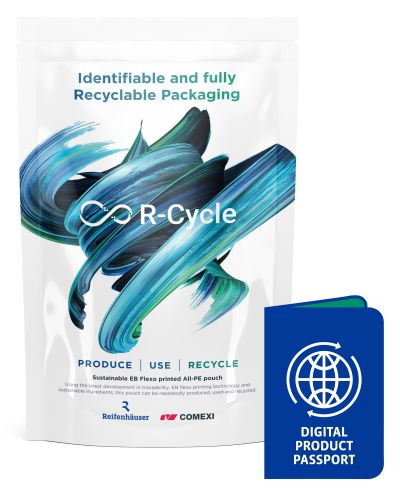
R-Cycle offers the DPP solution for the plastics value chain, especially in the packaging sector.
GS1 Germany, known for standards and solutions around barcodes, has published a new guideline “Circular Plastics Traceability”, which provides a uniform framework to model cross-company processes and exchange data.
The underlying technology is the cross-industry and internationally established GS1 EPCIS interface (Electronic Product Code Information Services). EPCIS is GS1’s core standard for improving transparency in companies or value networks.
R-Cycle, founded as an initiative by leading companies and organizations along the plastics value chain (including Reifenhäuser), was involved in the development of "Circular Plastics Traceability".
Application of standardized digital product passports
With all relevant information on the material and processing is stored in the DPP and is available along the entire product life cycle, it offers great opportunity for data management in the manufacturing process and recycling of plastic, especially in the packaging industry.
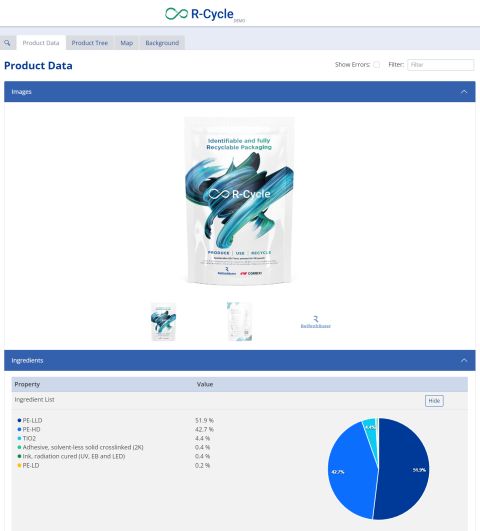
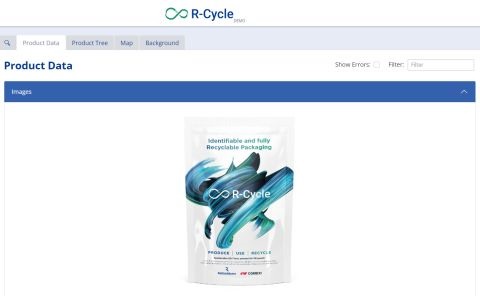
R-Cycle digital product passport provides information on all relevant ingredients of plastic packaging.
In addition to providing efficient information in the manufacturing process, DPPs also enable better recycling to recover high-quality recyclates. Using the information in DPP, waste sorting facilities can precisely categorize recyclable packaging and form recycling-friendly, single-sort fractions.
The DPPs can be accessed from suitable markings, such as digital watermarks or QR codes, on the packaging.