











CHINAPLAS 2023: Starlinger accelerates circularity of food and sack packaging in China

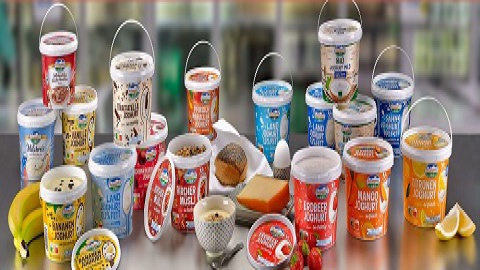
Currently, it has not yet been allowed to include recycled materials in plastic food packaging in China. Out of environmental concerns, however, those food packaging is expected to feature higher recyclability, according to Markus Grabenweger, Area Sales Manager, Starlinger & Co GmbH.
"We expect a shift towards circularity in this area, as it is currently happening in many other Asian countries," he said. And he highlighted that the development of PET and HDPE bottle-to-bottle recycling is rapid and strong.
Apart from circular food packaging, sustainability of woven packaging, such as woven PP sacks and the big bags, for dry bulk goods is also a hot topic in the industry.
Grabenweger introduced Starlinger's “Circular Packaging” concept that offers highly sustainable packaging solutions for a variety of sacks, including the big bags with strict safety standards.
Besides, as a technology provider for PET recycling, Starlinger's division Starlinger recycling technology has developed an innovative PET tape production technology, offering feasible and highly sustainable solution for closing the loop in dry bulk packaging.
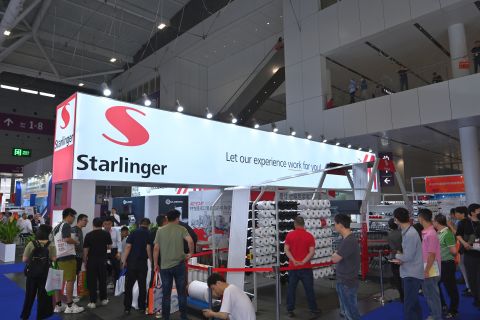
At its stand at CHINAPLAS 2023, the company presented the newly developed circular loom RX 6.0 pro, which was manufactured in China. "This new loom for Starlinger accelerates circularity of food and sack packaging in China operates at even higher production speed than the previous model, is easy to handle and thus very operator friendly, and achieves outstanding fabric quality," he said.
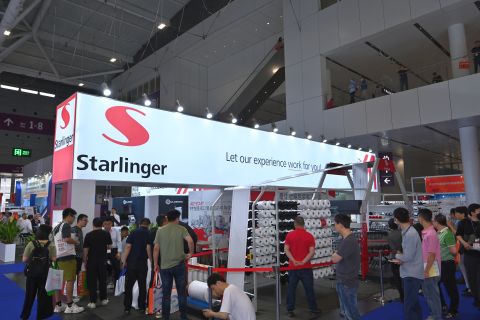
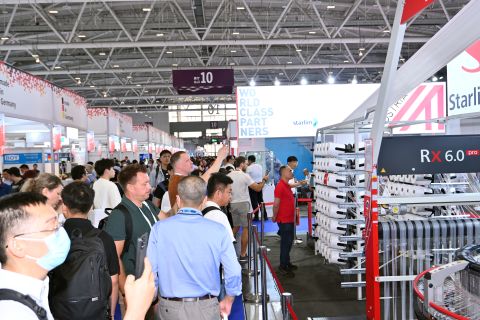
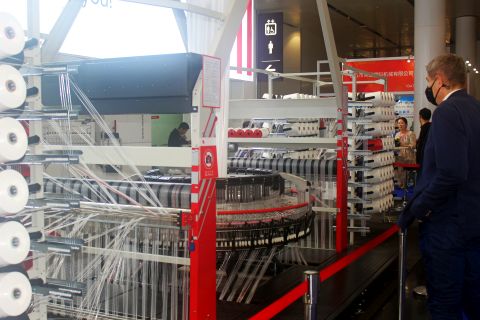
Starlinger showcases its RX 6.0 pro at CHINAPLAS 2023.
There, visitors could also learn about Starlinger's latest high-speed sack conversion lines, as well as its recycling systems which include technologies for food-contact rPET and rHDPE.
These lines reflected that the company's R&D focus is on sustainability. "With our new technical development, we aim to make woven plastic sack production not only more efficient and cost-saving, but also more sustainable," Grabenweger shared.
The machines can process materials with high recycled content. The company expects this will allow customers to reuse both their own in-house production waste and also external PP waste, contributing to the reduction of overall plastic waste in packaging production.
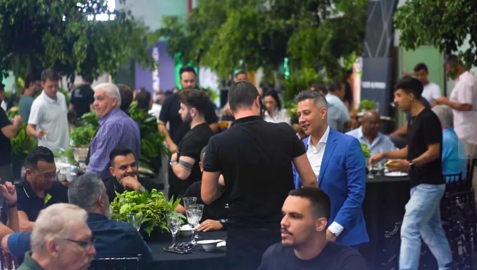
At the trade fair, Starlinger had the opportunity to meet its customers from China as well as different regions of the world. The company took the chance to finalize some of its ongoing negotiations and acquire new contacts.
Looking ahead, Grabenweger added that the lack of electronic parts and microchips continues to be a difficulty, yet the situation is starting to improve. He is still optimistic about the coming two years. "After the lifting of COVID-19 restrictions, we are expecting a positive market development for 2023 and 2024 as many companies held back their investments but are now ready to move on."