











Clariant and Technical University of Munich renew alliance in sustainable catalyst system

Clariant and Technical University of Munich (TUM) renewed their long-term strategic partnership in the field of research and application of new catalyst systems.
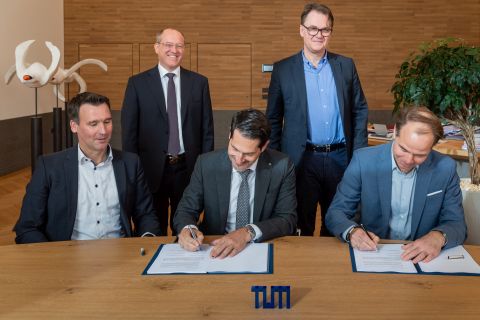
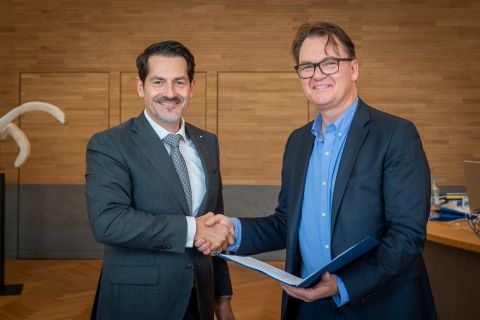
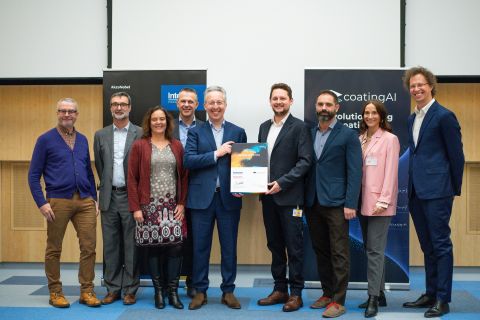
The signing of renewed strategic partnership between Clariant and TUM.
The MuniCat (Munich Catalysis) cooperation mainly addressed sustainability aspects. It has generated improved catalyst formulations and innovative process technologies since 2010, and will continue to focus on sustainable chemistry applying catalysis.
Mutually beneficial alliance
MuniCat alliance combines the capabilities of both partners in terms of research, improvement and application of existing chemicals, but also innovative, novel catalysts and prcesses.
Marvin Estenfelder, Head of R&D at Clariant, commented that the partnership had been very symbiotic. With the company have access to cutting edge research methods and technologies developed at the university while young TUM researchers benefited from Clariant’s long industry and applications expertise.
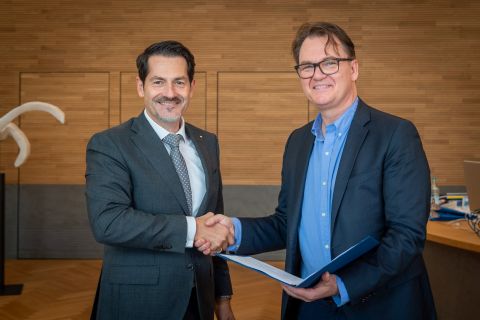
Prof. Thomas F. Hofmann (left), TUM President, and Richard Haldimann, Chief Technology and Sustainability Officer at Clariant.
Successful and productive cooperation
Joint research has already produced a number of solutions to manufacture chemical products in a more energy-efficient and environmentally friendly way.
As part of the cooperation, more than 30 project were completed to develop innovative catalyst formulations, production and commercial application, and more than 250 scientific articles on the technical progress have been published in papers with global reach.
A collaboration between Clariant, TUM and Linde also produced new catalysts for the oxidative dehydrogenation of ethane (ODH-E), an innovative, low emissions catalytic technology to produce ethylene (EDHOXTM).
This novel catalyst is step change in selectivity and productivity enabling reduction in CO2 emissions by up to 100% versus the conventional steam cracking.
Ongoing and future projects on sustainability challenges
New projects targeting on sustainability aspects are already underway, including the use of artificial intelligence (AI), machine learning (ML) and digitalization tools.
The continuing partnership will also focus on new technologies contributing to the hydrogen economy and sustainable aviation fuels (SAF), as well as high-performance catalysts for the conversion of CO2 into short chain alcohols.
Aspects of catalyst and value product recycling will play a crucial role for the prospective project agenda. Standard modelling and simulation tools using AI and ML methods will also be used and further developed to ensure high quality.