
















ALPLA’s rPET and rHDPE plants reduce carbon emission by up to 87%

ALPLArecycling, under the plastic packaging specialist ALPLA, operates production plants for recycled PET (rPET) and recycled HDPE (rHDPE). Calculation by the independent life cycle assessment specialist c7-consult provides data on product carbon footprint for rPET and rHDPE production in four plants in Mexico and Germany.
ALPLA invests more than EUR 50 million annually in recycling and uses advanced technologies to produce recycled material, with an installed and projected output capacity of 350,000 tons per year.
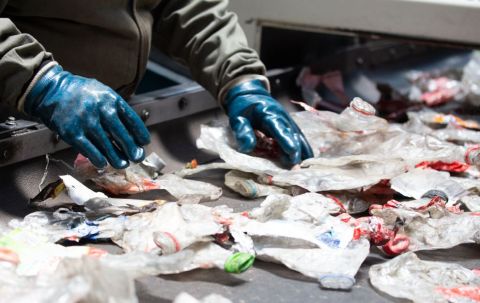
ALPLArecycling operates 13 recycling plants worldwide.
Circularity pioneer in Mexico
ALPLArecycling produces 30,000 tons of rHDPE per year at its Toluca recycling plant in Mexico. Production in Toluca causes 0.69kg of CO2 emission per kilogram, which is 70% fewer emissions than virgin material.
Since 2005, ALPLA has been operating the first PET recycling plant in Latin America within the joint venture IMER, together with Coca-Cola FEMSA and The Coca-Cola Company. It has an annual production capacity of 16,000 tons of rPET in which the production causes 0.38kg of CO2 emission per kilogram, an 87% reduction than virgin PET.
rPET production capacity in Mexico will be increased to 51,000 tons next year.
Household recyclables collection in Germany
ALPLArecycling in Germany has an annual production capacity of 43,000 tons of rPET. Materials sourced from household recyclables collection are processed at the site in Bitterfeld-Wolfen, Saxony-Anhalt.
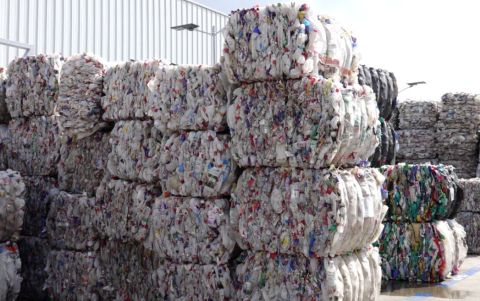
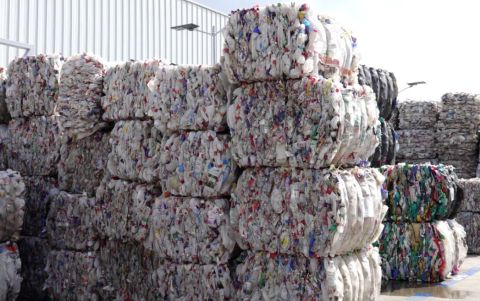
ALPLA processes used plastics into recyclate.
Recycling PET bottles from household collection requires slightly higher energy for washing. Therefore, 0.93kg of CO2 emission per kilogram of rPET is resulted in Bitterfeld-Wolfen, which is 68% fewer emissions.
For PET recycling site in Bad Salzuflen, North Rhine-Westphalia, it produces 0.68kg of CO2 emission per kilogram, corresponding to a reduction of 77%.
Further reduction with renewable energy
For ALPLArecycling’s recycling plants in Austria and Poland, through the additional use of renewable energy, rPET can produce a footprint of up to 0.21kg of CO2 emission per kilogram, which is a reduction of up to 93%.
Switching to renewable energy is currently also being considered for plants in other countries.