





















Report: Biobased insulation materials continue to grow in the European market

Ceresana, the German-based market research institute, analyzed and published its first edition of study specifically on the European market for insulation materials made from renewable raw materials.
The market report expected sales of the “green” building materials to exceed EUR 2.3 billion by 2032.
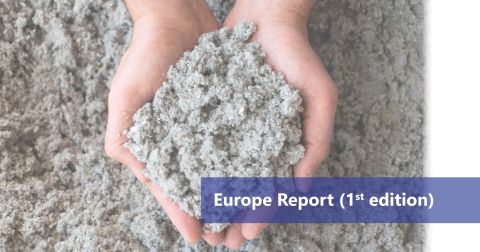
Ceresana published its first edition of study on biobased insulation material in European market.
Growing use of insulation in construction
Well-insulated walls reduce required heating energy or cooling load of buildings. These reduce energy cost and carbon dioxide emission.
Renewable raw materials, such as flax, straw or reed, can further improve energy balance and ecological footprint of buildings. They are available with eco-labels such as the German “Blauer Engel (Blue Angel)” and the Austrian “Österreichis-chen Umweltzeichen (Austrian environmental label)”.
According to the study by Ceresana, the demand is expected to increase significantly over the coming years, with the highest compound annual growth rate (CAGR) of 3.4% in residential construction, and slightly less in commercial.
Construction of warehouses, logistics centers and data centers are ray of hope for the struggling construction industry. With new construction only grows slightly, the institute forecastd growth rates of up to 4% per year in renovation sector.
Energy-efficient refurbishment of residential and public buildings is subsidized by the state. In the EU, better thermal insulation is one of the focus of the recovery and resilience plans for the “green transition” until 2026.
Wide advantages of biobased insulation
Not only costing more and less known than mineral and synthetic products, natural materials have to be specifically protected against water, fire and pests.
Biobased insulating materials offer a list of advantages. They are ideally non-toxic and biodegradable after usage period.
They also provide physical advantages – as many biobased insulation materials can absorb water vapor from the room air and then release it again. In the event of fire, wood panels, sawdust and other biobased insulation materials can be more predictable and less dangerous than plastic insulation made of EPS or XPS.